


In the name of investigative journalism, I bought a dupe of my own shoes. They cost me over $100 just to arrive in a bubble-wrapped garbage bag.
There is something uniquely dystopian about typing your own product into a search bar and watching your designs replicated back to you in poisoned polyurethane.
The photos on the listing were stolen directly from our website, logos cropped out and replaced with their factory’s watermark.
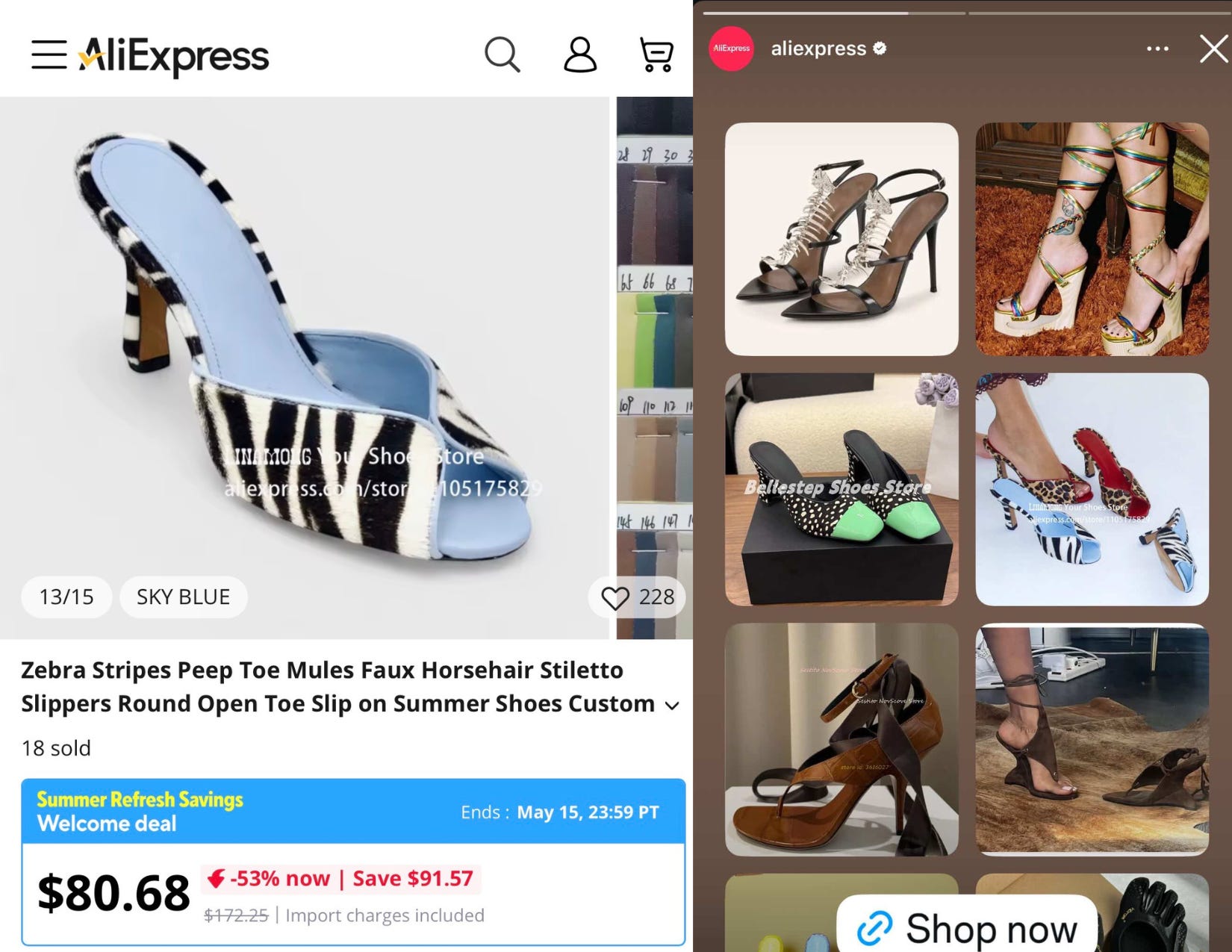
You’re probably wondering why I would willingly hand money over to the people stealing my designs.
Partly because I’m nosy.
Partly because I wanted hard proof.
Mostly because if I had to suffer through seeing these in person, I was bringing everyone else along for the ride. (Unboxing vid here.)
When the package arrived, the chemical smell hit first. Then came the 'craftsmanship,' if you can even call it that: glue spilling out of the seams, cheap plastic substituted for leather. It looked like someone tried to recreate the shoe from memory after seeing it once on TikTok.
Which, honestly, was probably the exact design process.
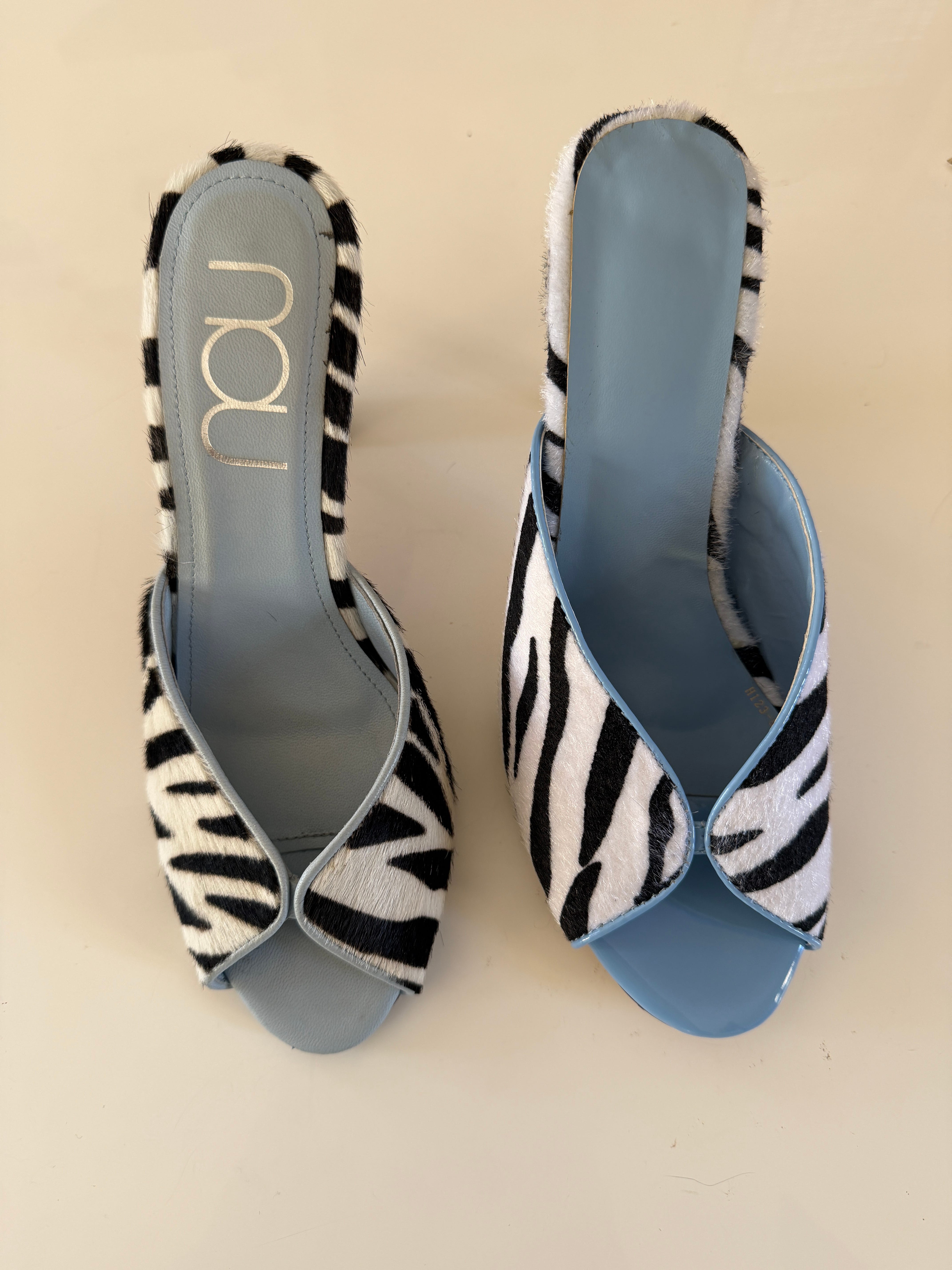
And yet before we got the listings removed, Alibaba informed me that over 40 people had already purchased them.
And that doesn’t even include the random brands currently white-labeling the dupes, slapping their logos onto the insoles, and passing them off as original designs. (examples here, here and here.)
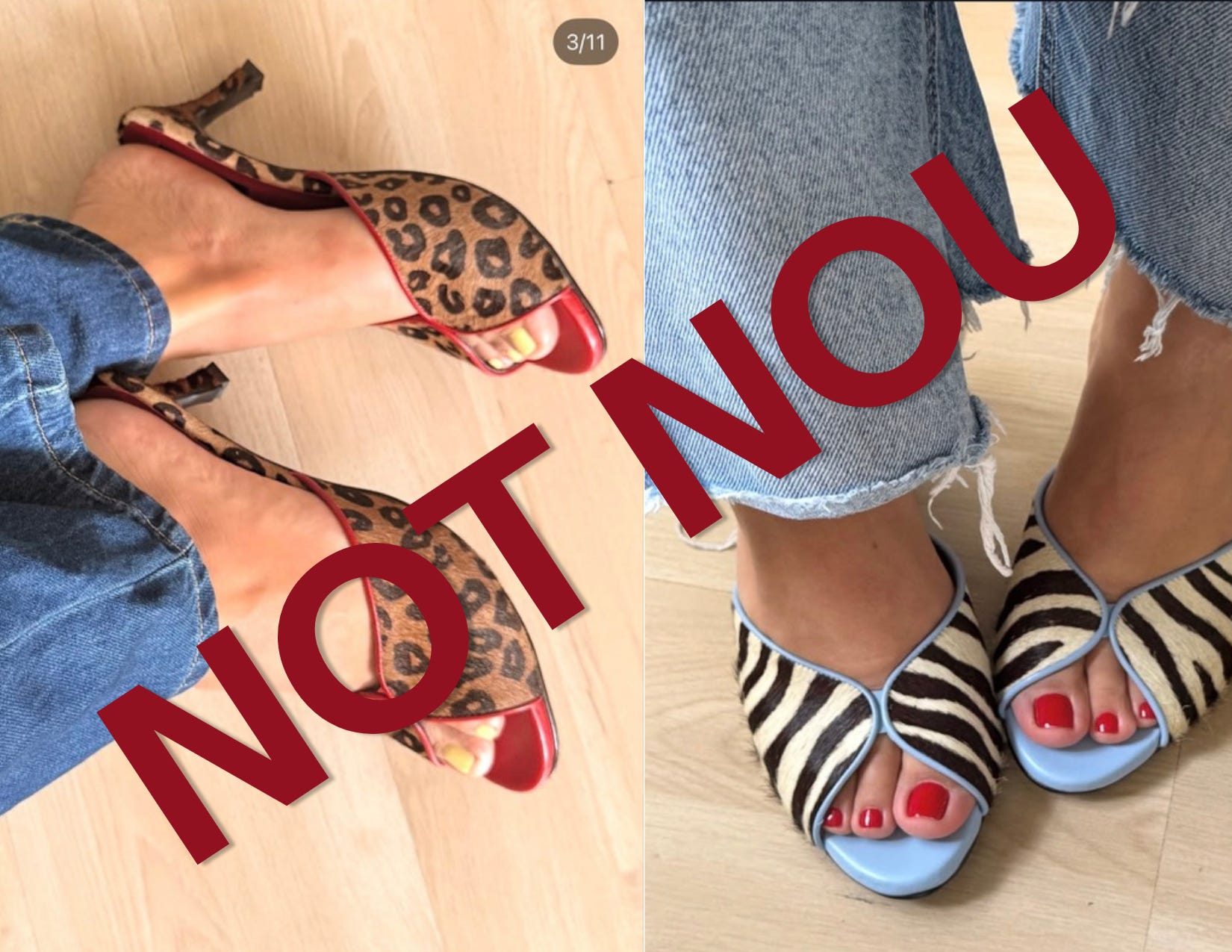
That’s the dupe economy.
One brand creates demand.
A factory copies it cheaply.
Ten random brands buy it wholesale.
Suddenly it’s being produced at scale and pushed onto Amazon, Walmart, and your TikTok Shop feed.
People love to say dupes are “democratizing fashion,” which is a very poetic way to describe stealing from independent designers while pretending it’s activism.
And before anyone starts foaming at the mouth: no, this is not a conversation about Chanel or Prada or billion dollar conglomerates with legal departments inhaling lawsuits for breakfast.
This is different.
When you buy an indie dupe, you are directly affecting a highly intentional supply chain. In our world, that looks like:
The artisan in Portugal hand sculpting your shoes.
The local business supplying the leather.
The family-run factory taking a chance on a young brand.
The scrappy team trying to build something original in a market that rewards speed over thought. (Internally, nou is literally just me, my partner Austin, and our part-time marketing queen Katie.)
What scares me just as much as the theft is how completely numb we’ve become to it all. Someone posts a product online and immediately people are commenting: “Link?”
Which can be too casually followed by an affiliate link labeled: “Similar here.” if the product is not on affiliate program or sold out.
Behind a lot of these dupes is an industrial system built to produce things as cheaply and quickly as possible. I could write an entirely separate piece about the factory conditions tied to ultra-cheap counterfeit production and the reality of how little something has to cost to be sold for these prices. The OECD has an incredibly eye-opening report on it here.
Which is exactly why conversations like this matter.
Because if independent brands stop defending originality, craftsmanship, and creative integrity, who exactly is left to do it?
My ask of anyone reading this is simple:
Save up for the product you love.
Be educated on what you’re actually buying and supporting.
Shop secondhand. Honestly, I would respect someone hunting down some obscure zebra-and-blue vintage shoe on eBay that predates us far more than buying a counterfeit version of ours.
That’s personal style. Not outsourcing your taste to counterfeit culture.
And respectfully, if you’re buying nou dupes, you’re dead to me.
obsessed with ur take on this
Seriously thank you for saying this, especially for the people in the back! Ahem Bethany! No one understands the unimaginable craftsmanship that goes into high quality products and this irks the crap out of me how people are keeping up with trends and don’t realize factory conditions and the cheap labor all just to stay relevant. Fashion piracy has always been a problem and has gotten so much worse now. Keep making beautiful shoes as the world needs more people to speak up about this!